Latest Articles

  • Circuits with a brain image

    Predicting Patterns for Breast Cancer Risk: How AI Maps Chemical Exposures and Health

    Dr. Dimitri Abrahamson is a scientist at UCSF, working alongside Dr. Kimberly Badal in her ongoing chemical mixtures study. As a computational chemist using virtual laboratories, in addition to test tubes, Dr. Abrahamson’s expertise is in the connection of technology, medicine, and chemistry. Camille Sytko (Science Communications Intern) and Lianna Hartmour (Zero Breast Cancer Program and Communications Director) at the Collaborative for Health & Environment (CHE) had the opportunity to interview him to better understand the important role machine learning plays in the study, and what benefits machine learning may continue to bring to the field of environmental health.

  • 2025 Impact

    In 2025, Zero Breast Cancer continued to thrive as part of the Collaborative for Health and Environment (CHE). Our ongoing work in multigenerational breast cancer risk reduction, survivorship, and research partnerships is moving us toward our vision of a world with zero breast cancer. Below we have spotlighted outcomes of some of our most impactful programs.

    Resilient Me Health & Wellness Coaching

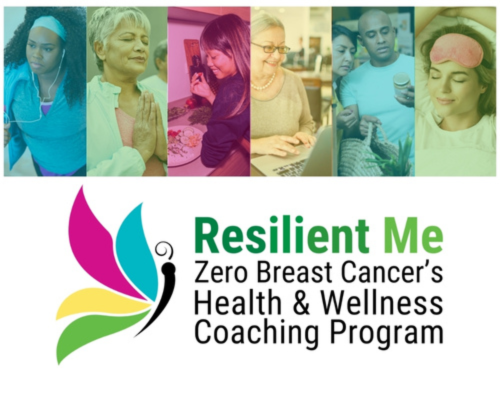
    The Resilient Me Health and Wellness Coaching program is for individuals who have completed active breast cancer treatment and people with metastatic breast cancer who are not in an intense treatment phase. It includes 12 weeks of free Zoom sessions with a certified coach. Designed to help survivors thrive, the program provides one‑on‑one coaching that supports sustainable lifestyle changes to improve long‑term health, manage treatment side effects, and reduce anxiety and recurrence risk. Participants receive personalized guidance across key wellness areas—including physical activity, nutrition, sleep, stress management, and reducing exposure to harmful chemicals—while building confidence and gaining practical tools to support lifelong well‑being. Thanks to funding from the Safeway Foundation, the program is available at no cost and is offered virtually to survivors across Northern California.

    In 2025, Resilient Me's impact was above industry standards, especially for a free program. For all participants in 2025, in 76% of goal-relevant weeks, at least one goal was met. There was a 72% graduation rate where clients participated in all 12 weeks, and 78% of graduates completed pre- and post-program surveys, indicating a sustained level of commitment to the program. Of those respondents, 93% reported improved health in at least one program area, and 100% found their coach effective, reported the program had a positive impact in their lives, and recommended the program to others.

    2025 Coaching Numbers

    2025 Coaching quotes

    Healthy Futures

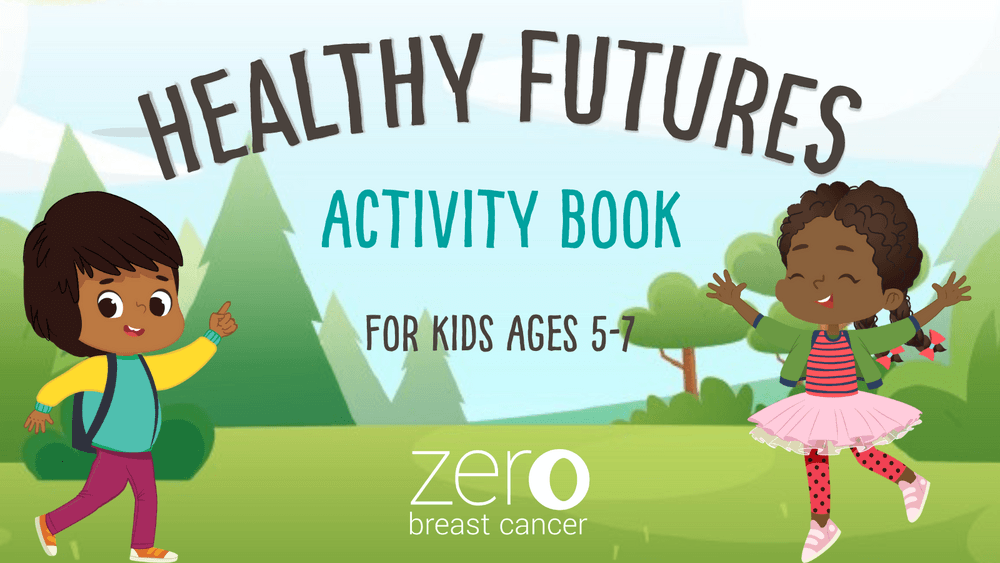
    Healthy Futures is an activity book popular among Girl Scouts for children ages 5-8. Age-appropriate activities focus on increasing healthy behaviors to reduce both the likelihood of early puberty and lifetime breast cancer risk. Children complete physical activity, healthy eating, sleep, and stress management (“feeling better”) activities to receive a patch in the mail. 2025 saw continued success for this program in reach and engagement.

    2025 Healthy Futures Numbers

    2025 Healthy Futures Quotes

    Webinars

    In 2025, Zero Breast Cancer hosted two webinars in partnership with Kaiser Permanente Division of Research. The first event, “Breast Cancer and Bone Health: Pathways Study Findings and Clinical Recommendations,” featured Marilyn Kwan, PhD, from Kaiser Permanente Northern California Division of Research, and Amber Wheeler, MD, from Kaiser Permanente San Francisco. The second webinar, “Physical Activity and Breast Cancer: Pathways Study Results and Clinical Recommendations,” featured Rikki Cannioto, PhD, EdD, MS, from Roswell Park Comprehensive Cancer Center, and Holly Rodriguez, PT, MPT, CLT-LANA from Kaiser Permanente Vacaville. Both events were well attended with high levels of engagement from participants.

    2025 Webinar Numbers

    2025 Webinar Quotes

  • Advocates Diane Heditsian, Vivian Lee, and Susie Brain

    What is the role of advocates in environmental breast cancer research?

    This blog is the fourth in a series about an ongoing study that examines how environmental exposures to chemical mixtures may contribute to breast cancer risk (the first blog explains the study, the second explains non-targeted analysis, and the third explains DNA methylation). The study is led by Dr. Kimberly Badal from the University of California, San Francisco. In addition to collaborating with other researchers, Dr. Badal’s study prioritizes collaboration with breast cancer research advocates. The three advocates involved in this study are breast cancer survivors whose lived experience makes them uniquely suited to communicate the need for environmental breast cancer research and ensure that the research represents patient interests.

    Zero Breast Cancer’s Lianna Hartmour had the opportunity to speak with advocates Vivian Lee, Susie Brain, and Diane Heditsian about why there is a need for advocate involvement in environmental breast cancer research. She also spoke with Dr. Badal to hear her perspective on how advocates inspired her research.